Trenchless vs Traditional Sewer Line Replacement: What's the Difference?
August 21, 2026
You've got a failing sewer line, and the first thing anyone mentions is that there's a way to fix it without tearing up the whole yard. That's true, sometimes. But "trenchless" isn't a single method, and it isn't always on the table. Whether your line qualifies depends on what's actually wrong with it, how it's laid out underground, and what condition the old pipe is in right now.
Quick Answer:
Traditional sewer line replacement means digging a full trench along the pipe's path, removing the old line, and installing new pipe before backfilling. Trenchless replacement instead works through one or two small access points, using either a resin liner (CIPP) that cures inside the old pipe or a bursting head that fractures the old pipe while pulling new pipe through the same path. Trenchless usually finishes faster and disturbs far less yard, but it only works when the old pipe still holds a usable shape and the layout is fairly straight. Collapsed sections, severe bellies, or lines with multiple problem spots along their run typically need traditional excavation.
What Traditional Sewer Line Replacement Actually Involves
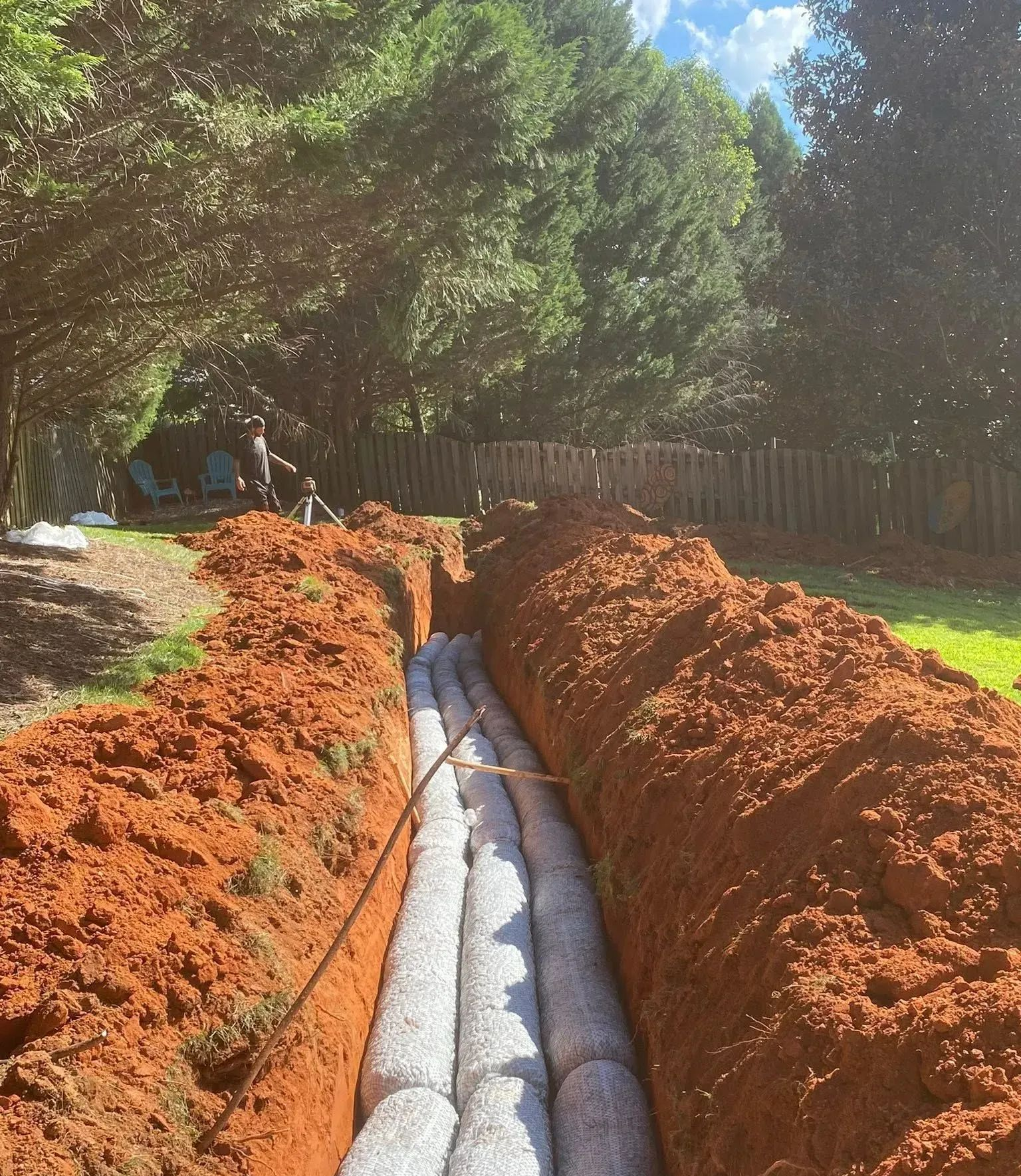
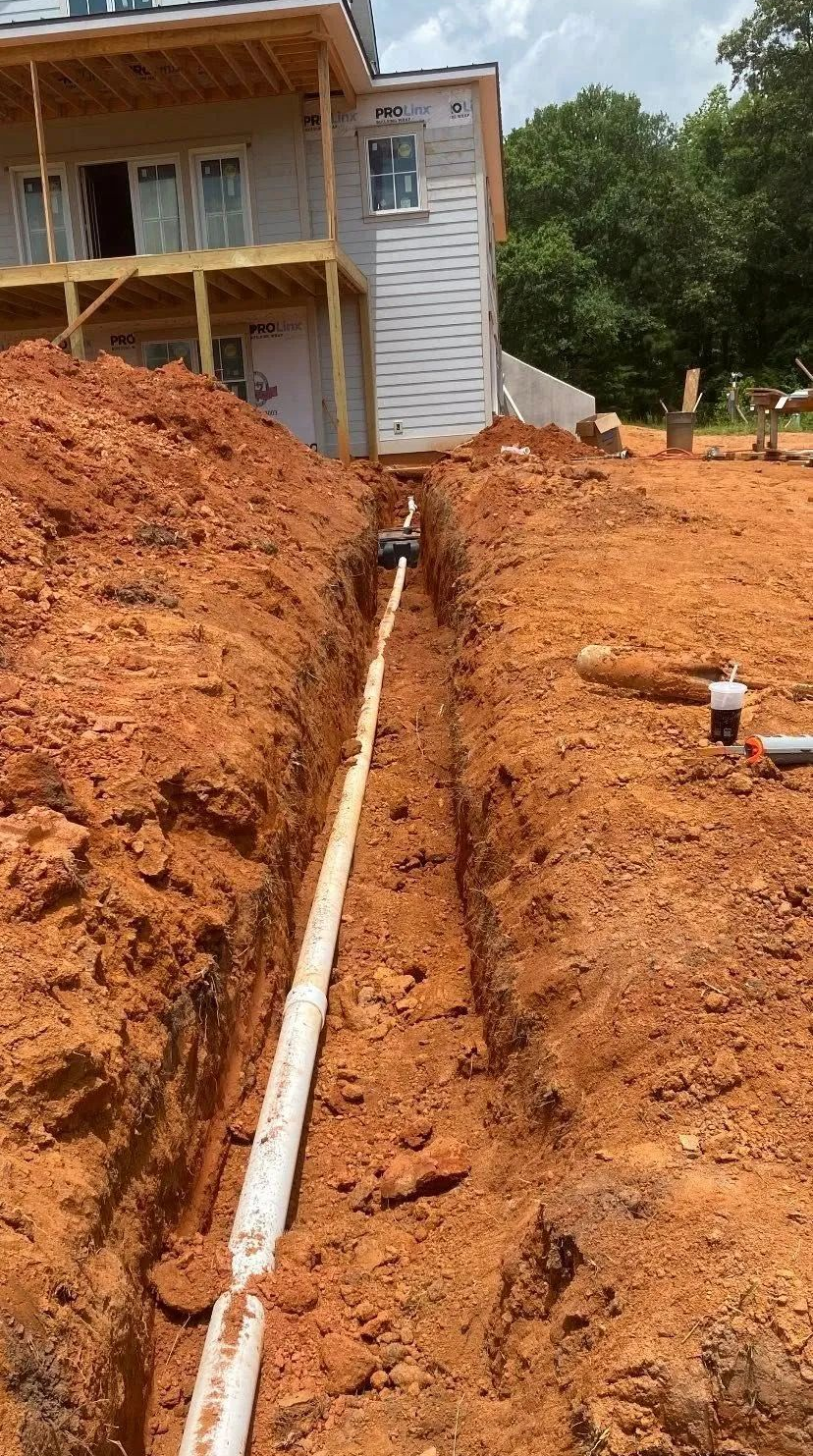
Traditional replacement is the method most homeowners picture: a crew digs a trench that follows the pipe from one end of the problem run to the other, exposes the old line completely, and swaps in new pipe before backfilling and restoring the surface.
Full Excavation
The trench has to run the entire length of pipe being replaced, and it has to be deep enough to reach below the frost line and give crews room to work. On a typical residential lateral, that trench can stretch anywhere from the house to the street or septic tank.
Complete Visual Access
Because the pipe is fully exposed, a technician can see and address every foot of it, not just the section causing symptoms. That matters when a line has more than one problem area, since trenchless methods generally need to work through the pipe from end to end without a clear look at what's happening in between.
Full Restoration Afterward
Once the new pipe is in and tested, the trench gets backfilled and the surface above it, grass, mulch beds, a section of driveway, gets restored. This is the part of traditional replacement that takes the most planning, especially where the line runs under something established.
Traditional replacement remains the more direct fix when a line has collapsed, shifted significantly out of alignment, or deteriorated across its full length rather than in one or two spots.
How Trenchless Sewer Line Replacement Works
Trenchless replacement covers two distinct methods, and they solve the problem in different ways. Both work through small access points instead of a continuous trench, which is where most of the appeal comes from.
Pipe Bursting
A bursting head gets pulled through the existing pipe from one access point to the other. As it moves, it fractures the old pipe outward into the surrounding soil while simultaneously pulling new pipe in behind it. The result is a full pipe replacement, not just a repair, using the old line's path as a guide.
Cured-In-Place Pipe (CIPP) Lining
A felt tube saturated with resin gets inserted into the existing pipe and inflated against the interior walls using air or water pressure. Once positioned, the resin cures, using hot water, steam, or UV light depending on the setup, and hardens into a new pipe wall inside the old one. CIPP technology has been used in the U.S. since the 1980s and follows established industry standards (ASTM F1216 among them) for how the liner is installed and tested.
Access Points, Not A Trench
Both methods rely on one or two small pits or existing access points, like a cleanout or manhole, rather than digging up the whole run. That's the core trade-off trenchless offers: a narrower footprint of disturbance in exchange for working through the existing pipe's path instead of around it.
Why the Old Pipe's Condition Determines What's Possible
Here's the part that gets glossed over in a lot of trenchless marketing: both trenchless methods depend on the old pipe holding a usable shape. Pipe bursting needs a path the bursting head can travel through without getting stuck. CIPP needs a surface the liner can seat against evenly. A pipe that's collapsed, crushed flat, or bellied so badly that water pools mid-run doesn't give either method what it needs to work.
That's why a camera inspection comes before any recommendation, not after. A technician runs a scope through the line to see exactly what shape the pipe is in, where the problems sit along its length, and whether the layout has the bends or offsets that would rule trenchless out.
When Trenchless Isn't an Option
Trenchless gets recommended often because it works well in the situations it's built for, but it isn't a fit for everything.
Collapsed Or Severely Crushed Pipe
If the old pipe has caved in, there's no consistent path for a bursting head to follow or a liner to seat against. The line has to come out.
Multiple Problem Areas Along One Run
A line with several separate trouble spots, root intrusion here, a cracked joint there, a sagging section further down, is harder to address reliably with a single liner or burst pass. Traditional excavation gives a technician direct access to fix each issue individually.
Significant Misalignment Or Bellying
A pipe that's shifted enough to create a low spot where wastewater pools won't drain correctly even with a new liner or burst-and-pull replacement inside it. The underlying grade problem has to be corrected, which means digging.
Very Old Or Incompatible Pipe Materials In Poor Condition
Some older pipe materials break apart rather than fracture cleanly when a bursting head passes through, and severely degraded pipe can crumble instead of providing a stable surface for a liner. A camera inspection is what catches this before work starts, not after.
Tight Radius Bends
Both trenchless methods work best on fairly straight runs. Pipe with sharp direction changes limits what a bursting head or liner can navigate through cleanly.
Yard and Property Impact
This is usually the deciding factor for homeowners once a line qualifies for either method.
Traditional Excavation
Expect a trench the full length of the affected run, which can mean disturbed grass, damaged landscaping, or a torn-up section of driveway or walkway depending on where the line runs. Restoration afterward brings the surface back, but mature trees, established beds, and hardscaping near the trench path take the brunt of the disruption during the dig itself.
Trenchless Replacement
Disruption narrows down to the access points, typically small pits at each end of the run rather than a continuous trench. For a line running under a driveway, mature landscaping, or anywhere digging would mean tearing out something established, that difference is significant.
Tip: Before assuming either method, walk the likely path of your sewer line and note what sits above it, mature trees, a driveway, a patio, irrigation lines. That's useful information to have ready when a technician runs the camera inspection, since it helps frame which method makes more sense for your specific property even before the pipe's condition comes back.
What This Looks Like in the Upstate
Around Anderson and the rest of the Upstate, the clay soil that makes drain fields drain slowly also plays a role here. Clay holds water and shifts through wet and dry cycles, and that same soil movement that tilts distribution boxes over time can also stress a sewer line's alignment, especially on older lines that have settled unevenly across a property. A line that's held together but shifted out of true alignment because of that soil movement is exactly the kind of situation where a camera inspection earns its keep before deciding which replacement method fits.
Root intrusion is common here too, particularly on older lines running near established trees. Roots that have worked their way into joints or hairline cracks can sometimes be addressed with pipe bursting, since the bursting head clears the old pipe, roots and all, as it goes. But roots that have caused enough structural damage to collapse a section change that calculation.
How a Technician Decides Between the Two
The decision isn't based on preference, it's based on what the pipe and the layout allow.
Camera Inspection First
A scoped inspection shows the pipe's interior condition, where problems sit along the run, and whether there's a consistent path for trenchless equipment to travel through.
Layout And Access Review
A technician looks at how straight the run is, what's above it, and where realistic access points would go for either method.
Severity And Scope Of The Damage
An isolated issue on an otherwise sound pipe often points toward trenchless. Damage spread across the run, or damage severe enough to compromise the pipe's shape, points toward traditional excavation.
Warning: Don't let a company recommend trenchless replacement without a camera inspection first. Committing to pipe bursting or a CIPP liner on a line that turns out to be collapsed or badly misaligned wastes the attempt and can leave you back where you started, needing the excavation you were trying to avoid in the first place.
Frequently Asked Questions
Is trenchless sewer replacement a repair or a full replacement?
Both trenchless methods result in a full new pipe, not a patch. Pipe bursting physically replaces the old pipe with new pipe pulled through the same path. CIPP lining creates a new structural pipe wall inside the old one. Neither is a temporary fix when done correctly.
Can trenchless replacement upsize a sewer line to a larger diameter?
Pipe bursting is the trenchless method that can accommodate an upsized line, since the bursting head fractures the old pipe outward to make room for larger replacement pipe. CIPP lining generally follows the existing pipe's interior diameter rather than increasing it.
How does a technician know which method fits my situation?
A camera inspection comes first, always. It shows the pipe's actual condition, where any problems sit along the run, and whether the layout supports trenchless equipment. That inspection, not a general preference for one method or the other, is what determines the recommendation.
Does trenchless work on a sewer line with tree roots?
Sometimes. Root intrusion that hasn't compromised the pipe's shape can often be addressed with pipe bursting, since the process clears the old pipe entirely. Roots that have caused a collapse or severe crack change that answer, since the pipe no longer holds a usable path.
What happens if trenchless equipment can't get through the old pipe?
If a bursting head or liner runs into a section it can't pass through cleanly, that section needs to come out through traditional excavation instead. This is exactly why the camera inspection and layout review happen before work starts, so the method chosen actually fits what's underground.
Choosing the Right Sewer Replacement Approach
For homeowners in Anderson, SC, the choice between trenchless and traditional sewer line replacement comes down to pipe condition, alignment, access, and the extent of the damage. Trenchless methods can preserve landscaping and hardscaping when the existing line provides a workable path, while traditional excavation offers complete access when collapsed sections, severe bellies, or major alignment problems make working through the old pipe impractical. A camera inspection provides the clearest information for determining which approach suits the property.
With 10+ years of experience, Tri-City Septic
understands how local soil conditions, aging pipe materials, roots, and shifting ground can affect sewer lines throughout Anderson. Rather than treating one replacement method as the automatic solution, the condition of the line should guide the decision. Matching the method to what is actually happening underground helps protect surrounding property, avoid unnecessary excavation, and create a replacement that addresses the underlying problem instead of simply working around visible symptoms.