Standing Water in the Yard After Every Rain? When a French Drain Solves It
September 22, 2026
Quick Answer: A French drain is worth installing when standing water sits in your yard for more than a day after rain, keeps showing up in the same low spot, and isn't tied to a septic drain field problem. The trench pulls groundwater and trapped rain into a buried, perforated pipe below the saturated soil and carries it downhill by gravity, so gravity does the work instead of a pump. On the red clay common around Anderson and the rest of the Upstate, that trench usually runs about 18 inches deep with a 4-inch perforated pipe wrapped in gravel and fabric, sloped at least 1 percent toward a real discharge point. If the wet spot sits over your septic tank or drain field, or carries a sewage smell, that's a different repair, and a French drain won't touch it.
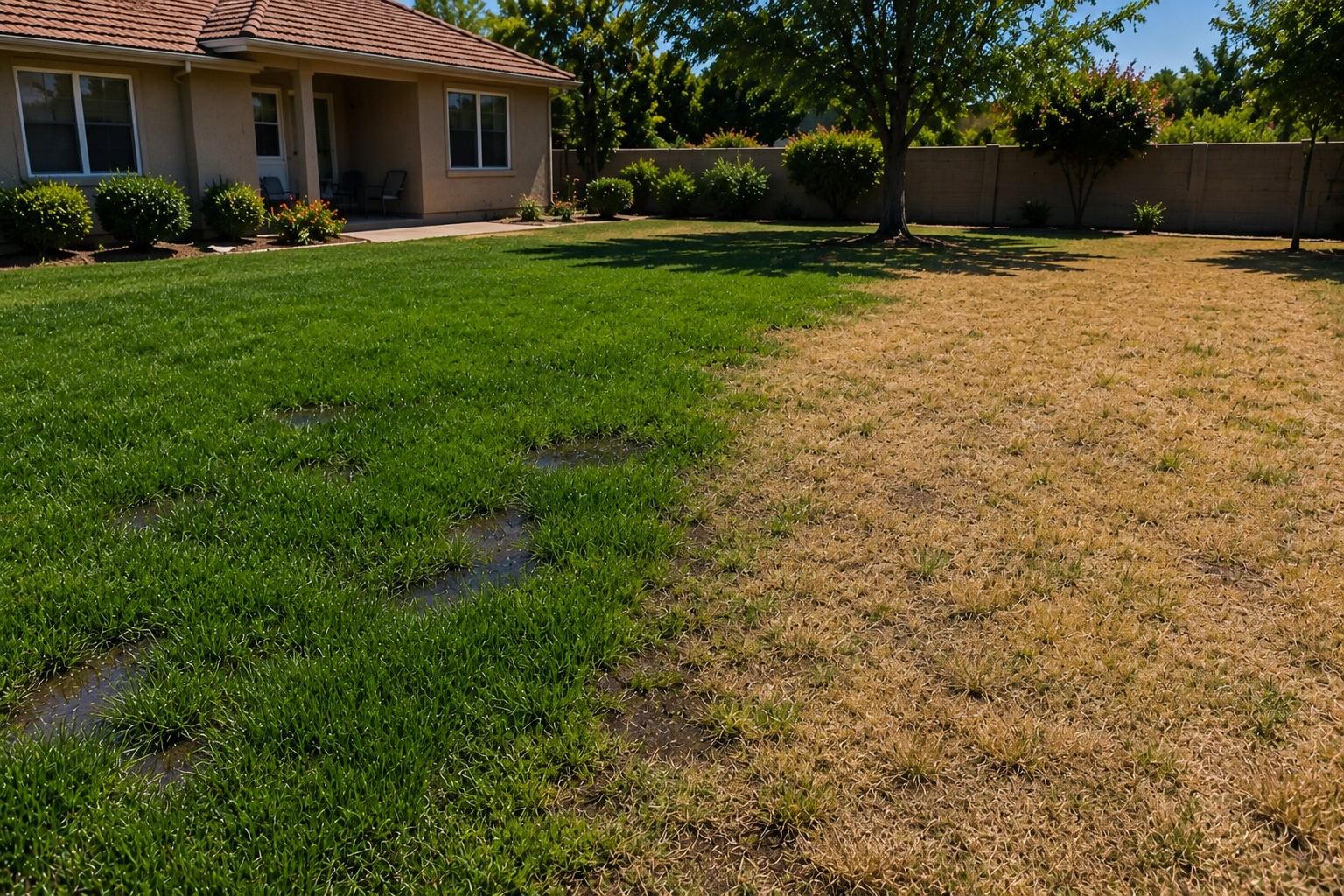
Every August, the same low corner of your backyard turns into a shallow pond. It's still sitting there two days after the storm passed, the grass underneath has gone soft and gray, and the dog won't walk anywhere near it. You've added topsoil. You've reseeded twice. Neither one lasted past the next hard rain.
That corner isn't broken. It's telling you something about what's underneath it.
Most standing-water complaints across the Upstate come down to one of two causes: water moving across the surface faster than it can soak in, or water sitting in the ground itself because the soil below won't release it. Telling those two apart matters, because a French drain solves the second problem. It does almost nothing for the first.
Why Your Yard Holds Water Longer Than It Should
Anderson sits on Cecil and Pacolet soils, the red clay that runs under most of the Piedmont from Greenville down through Pickens and Powdersville. In the upper few feet, that clay often measures somewhere between 45 and 60 percent clay content. Water moves through it at roughly 0.05 to 0.15 inches an hour, slow enough that federal soil surveys classify it as a "slow infiltration" group. A sandy soil down toward the coast can soak in water at more than 2 inches an hour by comparison, which is exactly why one hard storm here leaves a yard holding water for days instead of hours.
Add a summer thunderstorm that drops an inch of rain in thirty minutes, and the ground simply can't keep pace. That water has nowhere left to go but sideways, and down into whatever low spot gravity finds first.
And this is where most homeowners get it wrong. They assume more topsoil or a thicker lawn will fix what's really a soil problem. It won't. Clay compacts under foot traffic and mower weight, closing off what little pore space it had in the first place.
Surface Water and Groundwater Are Two Different Repairs
Not every wet spot needs a trench and a pipe. If water shows up right after a storm and clears out within a few hours once the rain stops, you're probably dealing with a grading or downspout issue, water running across the surface with nowhere flat to spread out. Extending a downspout, adding a swale, or regrading a low corner handles that kind of water without digging anything below ground.
A French drain earns its place when the water is coming up from below, not just running across the top. That's the spot still squishy two days after the rain, where you sink an inch with every step even in full sun. It usually means the water table under that patch of ground has risen higher than the soil can hold, or a hardpan layer of clay is trapping rain that fell days earlier. Surface fixes don't touch that kind of water. You have to intercept it underground and give it somewhere else to go.
Reading that difference correctly before anyone digs saves you from paying for the wrong fix twice.
Tip: Press a shovel a few inches into the wet spot on a dry, sunny day. If water beads up around the blade within a minute, you're dealing with a high water table or trapped groundwater, exactly the kind of problem a French drain is built to intercept rather than surface grading.
How the Trench and Pipe Actually Move the Water
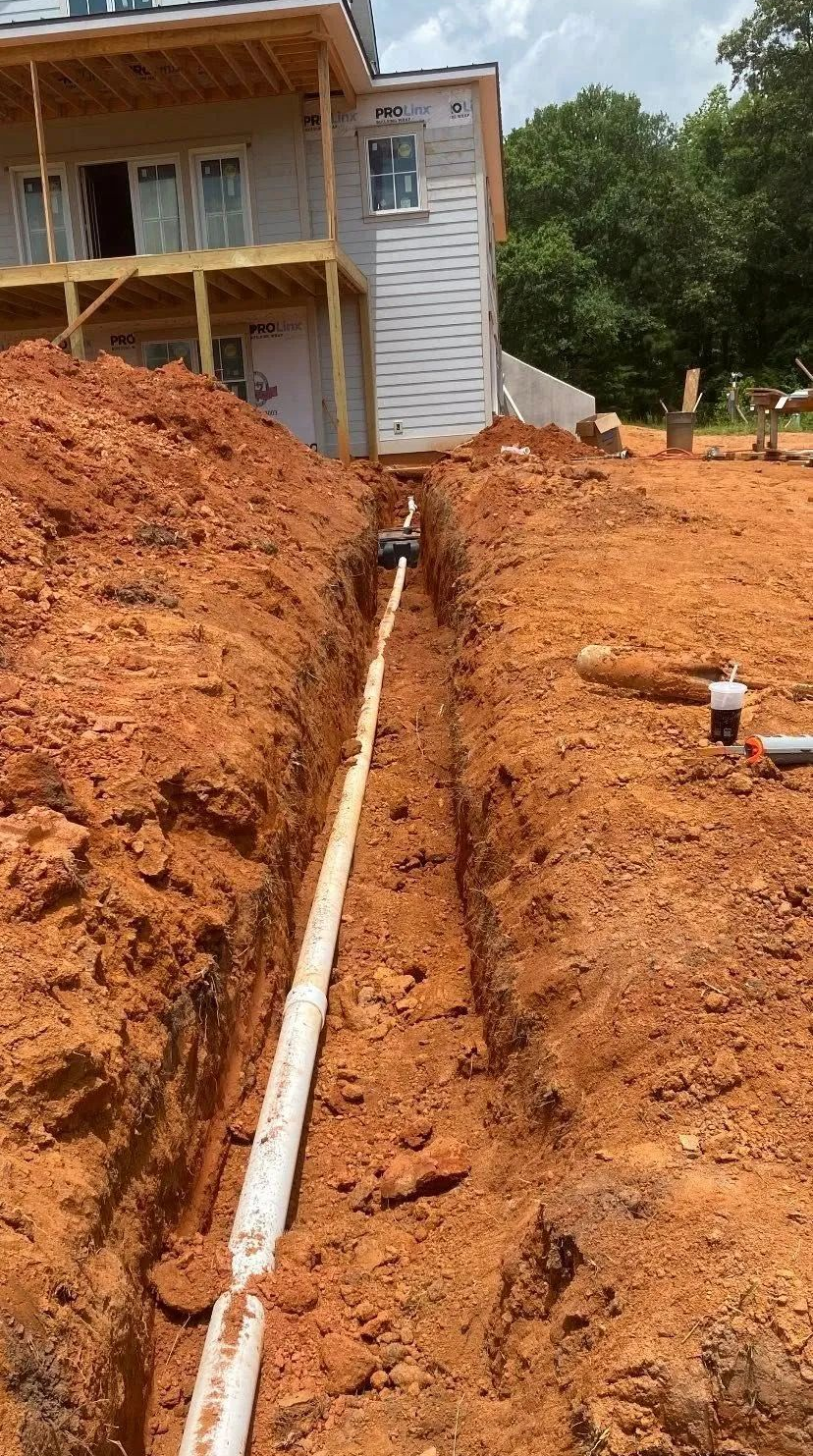
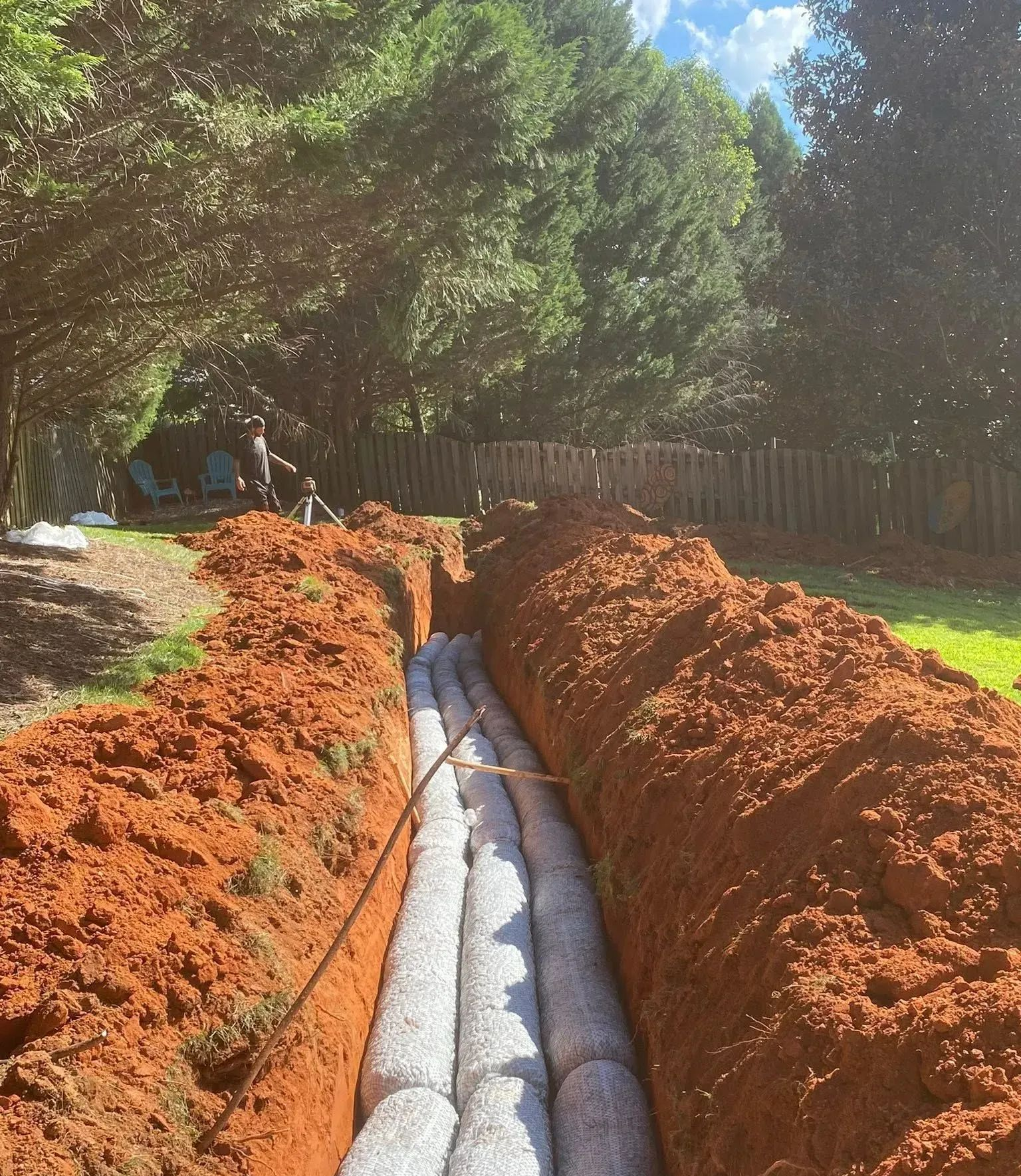
Underneath the surface, a French drain is a fairly plain system: a trench cut below the saturated zone, lined with fabric that keeps silt out, filled partway with washed stone, and centered on a perforated pipe that carries the water away. The perforations sit on the underside of the pipe rather than spread around it, so water enters from the saturated soil below and moves through the pipe instead of collecting inside it.
A typical residential trench runs about 18 inches deep and just as wide, built around a 4-inch pipe. The gravel packed around that pipe isn't there for looks. It gives water a faster path to the pipe than it would ever find through packed clay alone, and it keeps the pipe from silting shut over the years.
None of it works without slope. The trench has to drop at least 1 percent along its run, about an eighth of an inch of fall for every foot, so gravity pulls the water toward a discharge point instead of letting it sit in the pipe. Too flat, and the system backs up on itself. Too steep, past roughly 6 percent, and water exits fast enough to tear up whatever ground it lands on next.
A trench built to that spec can move somewhere around five gallons a minute. That sounds like a lot until you remember an 800-square-foot roof sheds close to 500 gallons in a single inch of rain. Pipe size and slope have to match how much roof and yard are actually draining toward that low spot, not just a number pulled off a general chart.
When the Wet Spot Is Actually a Septic Problem
Before anyone digs near a drain field or septic tank, rule out the obvious first. A soggy patch sitting directly over drain field lines, especially one that carries a faint sulfur or sewage smell, isn't a drainage problem at all. It's a sign the drain field itself is struggling to absorb what the tank is sending it. Grass that grows noticeably greener and taller in a strip pattern above buried lines points the same direction.
A French drain installed over a struggling drain field doesn't fix anything. It just moves surface water around a problem that's actually happening underground in the septic system itself.
The two issues can overlap, too. A drain field working overtime during wet months sometimes shows up as extra saturation nearby, which then gets blamed on "bad drainage" when the real cause sits upstream in the tank or the lines. If the wet spot lines up with where your septic system runs, that's worth a second look before anyone breaks ground.
What a Site Evaluation Actually Looks At
This is usually the deciding factor for homeowners once a line qualifies for either method.
Traditional Excavation
Expect a trench the full length of the affected run, which can mean disturbed grass, damaged landscaping, or a torn-up section of driveway or walkway depending on where the line runs. Restoration afterward brings the surface back, but mature trees, established beds, and hardscaping near the trench path take the brunt of the disruption during the dig itself.
Trenchless Replacement
Disruption narrows down to the access points, typically small pits at each end of the run rather than a continuous trench. For a line running under a driveway, mature landscaping, or anywhere digging would mean tearing out something established, that difference is significant.
What to Expect During and After Installation
Anyone digging in your yard should call 811 first so gas, water, and other buried lines get marked. That's standard on any excavation, not an extra step tacked on because a septic system happens to be nearby. From there, the trench gets cut to depth and grade, the fabric goes in, pipe and stone follow, and the whole run gets capped and backfilled. The last stage, regrading and reseeding or sodding the disturbed strip, matters more than people assume. A trench that isn't finished properly leaves a sunken line across the yard that collects its own puddle within a season..
Warning: A French drain that discharges onto a neighbor's property, into a septic drain field, or into a low spot with no further outlet just relocates the flooding instead of solving it. Every trench needs a real endpoint the water can actually leave from.
Once it's buried, there isn't much left to look at. A functioning French drain stays invisible most of the year and only proves itself during the next hard rain, when the spot that used to hold water for days is dry again by morning.
Sediment or fine tree roots can work into the gravel over the years, especially near mature trees, which is why an occasional check at the discharge point after a big storm is worth the few minutes it takes. Properly built systems on clay soil typically hold up for decades, though the exact lifespan depends on gravel quality, pipe material, and how much root activity sits nearby.
Frequently Asked Questions
How do you know if standing water needs a French drain instead of regrading?
Water that clears within hours of rain stopping usually means regrading or a downspout fix works. Ground that stays soft for a day or more, even in full sun, signals a real French drain problem.
Will a French drain actually work in Anderson's clay soil?
Yes. Clay slows water down, but a properly built trench still works. Gravel and pipe create a path with less resistance than clay, so water follows the trench instead of pooling. Site evaluation matters more.
How deep does a French drain need to be?
Most residential trenches run around 18 inches deep, though the right depth depends on where the saturated layer sits and where the discharge point falls. A trench that's too shallow can miss the water entirely.
Can a French drain get clogged?
Over time, yes, usually from silt working through torn fabric or roots growing into the pipe near trees. That's rare in a system built with proper fabric and stone. A quick check after storms helps.
Does a French drain help with a wet basement or crawlspace?
It can, when the water source is groundwater moving toward the foundation rather than surface runoff. A trench placed uphill of the foundation intercepts that water before it reaches the wall, solving the problem early.
How is a French drain different from a surface drain or catch basin?
A surface drain collects water that's already pooled on top of the ground and carries it away through a grate. A French drain works below the surface, pulling water out before it pools at all.
What Your Yard Is Trying to Tell You
A yard that stays wet for days after a storm isn't bad luck with the weather. It's the clay underneath doing exactly what dense Upstate soil does when groundwater has nowhere else to go. Reading that difference, surface runoff pooling on top versus water rising from below, is what separates a fix that lasts from one that doesn't. Skip that step, and it's easy to pay for regrading, then a French drain, then regrading again, chasing the same wet corner.
Tri-City Septic
has spent 10+ years reading yards across Anderson, SC, and the surrounding Upstate, where Cecil and Pacolet clay make that judgment call more important than the trench itself. A French drain sized for the wrong soil, or placed without checking what's happening below a septic system, solves nothing. Getting the diagnosis right first, surface water or groundwater, septic-related or not, is what determines whether a yard actually dries out for good or just moves the same puddle over.