French Drain vs Regrading: Which Actually Fixes a Soggy Yard?
October 12, 2026
Quick Answer: Regrading fixes water that runs across the surface and collects in low spots, and it works when the ground can be reshaped to slope away from the problem. A French drain fixes water that is already inside the soil, the kind that keeps a yard squishy for a day or more after the rain stops. A simple test separates them: if the wet spot dries within a few hours, look at grade and downspouts first. If it stays soft in full sun, the water is coming from below, and a buried perforated pipe in a gravel trench is the better tool. On Upstate red clay, many yards have both problems at once, and the best plan fixes the surface first and adds a trench only where the soil still holds water.
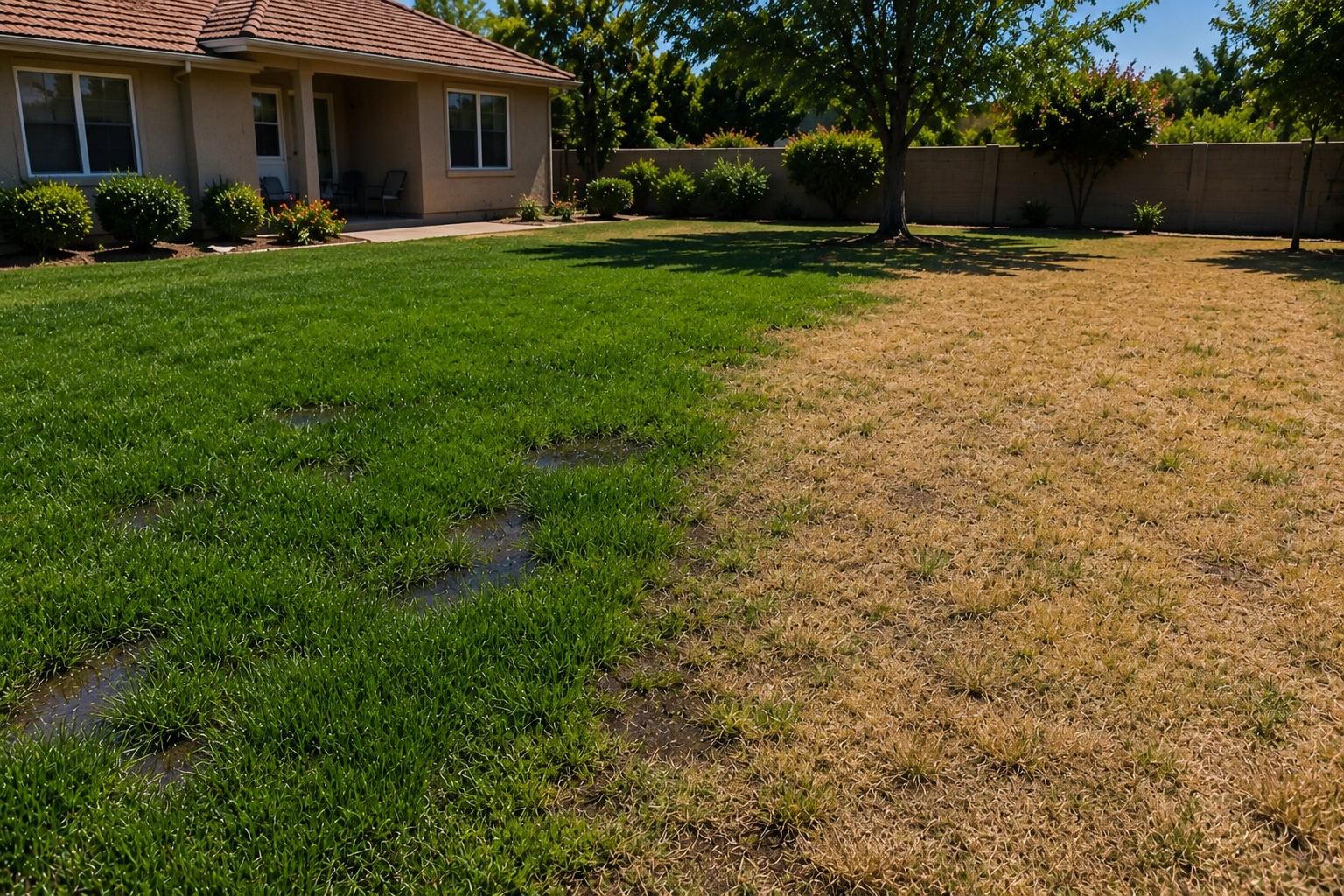
It rained Tuesday. By Thursday afternoon the low corner of your backyard is still soft, the mower leaves ruts in it, and a faint sour smell comes off the grass when the sun hits it. You have already spread topsoil over it once. A neighbor told you to "just regrade it." Another told you to dig a French drain. Both sound reasonable, and both cost real effort, so you want to know which one actually fits your yard before anybody picks up a shovel.
The honest answer is that these two fixes solve different problems. Picking the wrong one is the most common reason a drainage project fails, and in our experience it happens most often because the water was never diagnosed in the first place. Here is how we sort it out on a site visit, so you can do a rough version of the same thing yourself.
What Regrading Does and What It Cannot Do
Regrading means reshaping the surface of the ground so water runs off it instead of sitting on it. A common target is a drop of about one inch per foot for the first several feet moving away from the house, with a gentler slope across the rest of the yard that carries water to a place it can leave safely, such as a ditch, a swale, or the street side of the lot.
What It Solves
Regrading corrects surface drainage when rainwater collects in low spots, settled areas, or against slabs. Reshaping the ground allows water to flow away naturally.
What It Cannot Solve
Regrading cannot remove groundwater trapped in saturated soil. When underground moisture feeds a soggy area, reshaping the surface alone will not solve the problem.
Where It Runs Out Of Room
Regrading requires a suitable downhill route for runoff. Flat lots or properties surrounded by higher ground may lack drainage options without affecting neighboring properties.
What a French Drain Does and What It Cannot Do
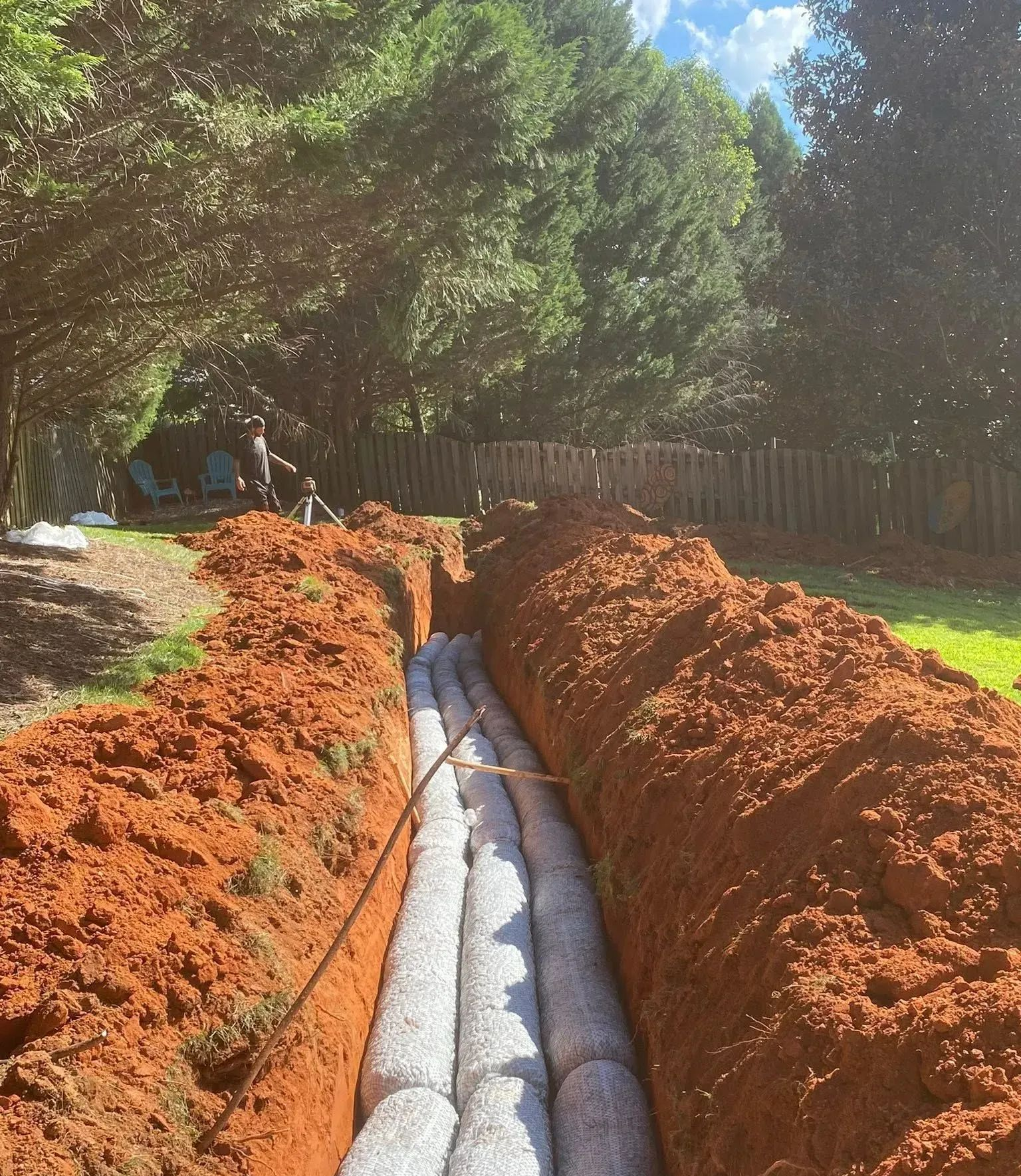
A French drain is a trench, usually about 18 inches deep on residential lots, lined with fabric, filled with clean gravel, and carrying a 4 inch perforated pipe near the bottom. Water moving sideways through wet soil finds the gravel, which offers far less resistance than the surrounding clay, drops into the pipe, and runs downhill by gravity to a discharge point.
What It Solves
A French drain intercepts groundwater before it reaches foundations, patios, or low yards. It reduces soil saturation, helping persistently soggy areas dry faster.
What It Cannot Solve
French drains rarely capture surface runoff without inlets and cannot correct poorly graded yards. They also require a proper discharge point away from problem areas.
Where It Runs Out Of Room
A French drain needs sufficient downward slope to reach its outlet. Flat lots without suitable discharge options may require alternative drainage solutions.
The Five Minute Test Before You Call Anyone
You can learn a lot about your yard without any tools beyond a shovel and a little patience. Try these checks the day after a good rain, or after you run a hose in the problem area for twenty minutes.
Watch How Fast It Clears
If standing water disappears within hours after rainfall, surface drainage is likely responsible. Ground remaining soggy for days suggests moisture trapped within the soil.
Push A Shovel In
Dig approximately one foot into the wet area. Persistent water suggests saturated clay or a high water table, while dry soil below points toward surface drainage problems.
Follow The Downspouts
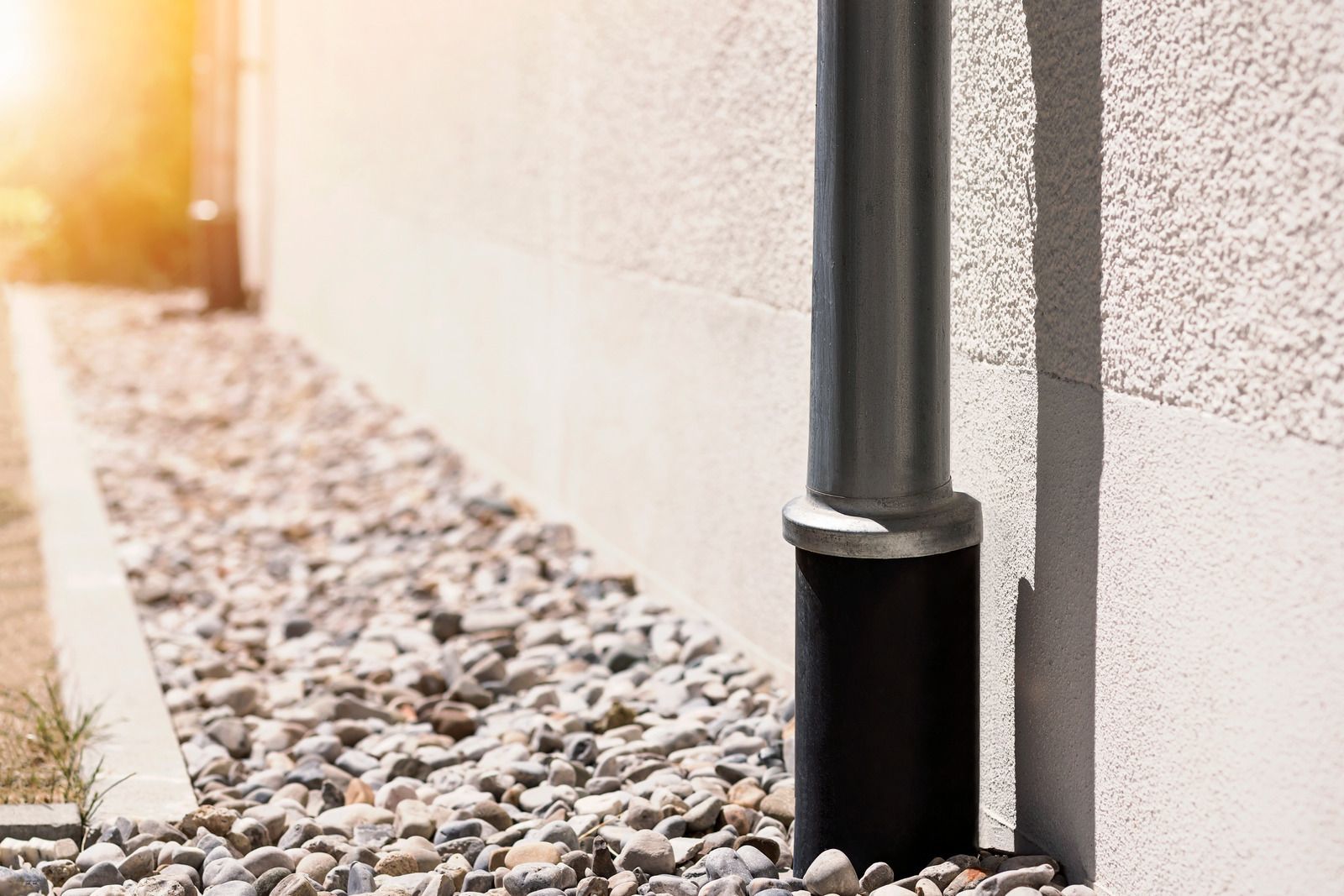
Check every nearby gutter outlet. Downspouts discharging beside wet areas continually add moisture, so extending them farther away is often the cheapest improvement before digging.
Look Uphill
Check whether slopes, neighboring driveways, or rooflines direct water toward your yard. Incoming runoff combined with groundwater often requires grading improvements and French drainage together.
Tip: Take a few photos of the problem spot at the same time of day, once right after a rain and again 24 and 48 hours later. A simple series like that tells a drainage crew more than any description over the phone, because it shows how fast the water is really leaving.
Why Upstate Clay Changes the Answer
Anderson and the surrounding Upstate sit on red Piedmont clay, soil that takes in water slowly and gives it back even more slowly. A few inches of rain in an afternoon can arrive much faster than the ground can absorb it, so some of it runs off and some of it soaks in and stalls above the clay layer. That is why so many yards here have a mixed problem.
On clay, regrading alone often disappoints. You can build a perfect slope and still have water that creeps along just under the surface and comes back up lower on the property. Clay also compacts easily, especially after heavy equipment has crossed it, and compacted clay behaves like a shallow pan that holds water against the roots.
French drains work in clay, but they have to be built for clay. A trench sized for loamy soil will undersize the job, because the water arrives slowly and in large volume after storms. The fabric wrap matters more here too. Clay silt works its way into unprotected gravel and clogs it, and a drain that clogs in three years was a poor install, not a bad idea.
When You Need Both
Most of the yards we get called to fall into this middle group. The grading is slightly off, the soil is slow, and a downspout is making it worse. In those cases a sequence works better than a single fix.
Step One: Manage The Roof Water
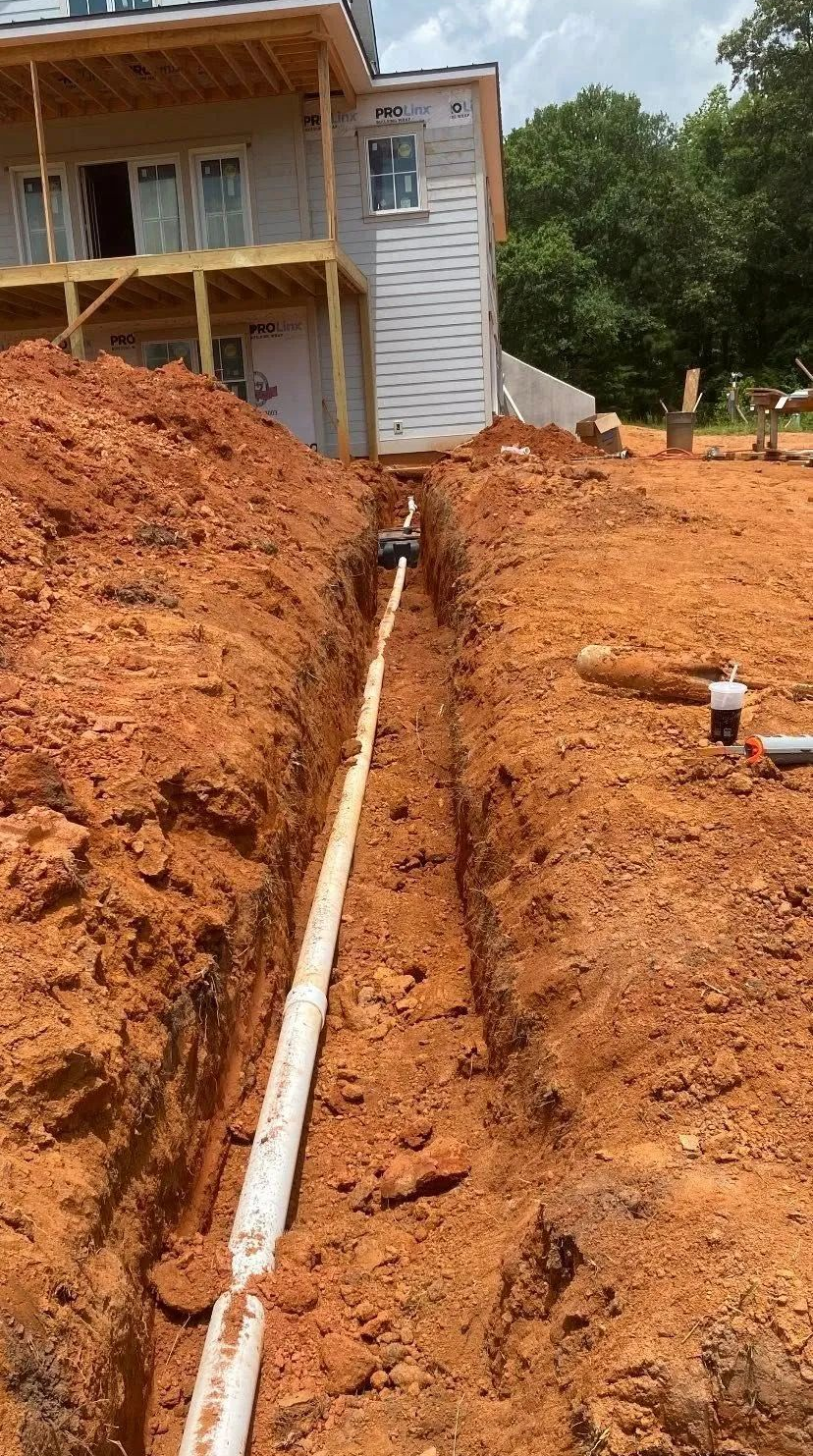
Redirect downspouts away from problem areas or connect them to solid drainage pipes leading to safe discharge points, reducing excess water.
Step Two: Reshape The Surface
Fill low spots, restore slopes away from the house, and create clear drainage paths before trenching to reduce water entering excavations.
Step Three: Add A Trench Where The Soil Still Holds Water
If soil remains soft after drainage improvements, install an uphill French drain leading to a suitable discharge point to collect persistent groundwater.
Doing the steps in that order keeps you from paying for a long trench you may not need, and it keeps you from regrading a yard that was never a grading problem.
A Warning About Yards Near the Septic System
If your wet area is near the septic tank or the drain field, stop and treat it differently. A soggy spot with a sewage smell, bright green grass growing in a strip, or slow drains inside the house can be a sign that effluent is surfacing, which is a failing system, not a drainage problem. A French drain placed near a drain field can also carry untreated water to the wrong place or pull water away from the field in a way that hurts how it works.
Get that area checked before anyone digs in it. Telling groundwater apart from a septic problem is something we do on every drainage visit, because the symptoms overlap, and the fix for one makes the other worse.
Warning: Never dig, regrade, or install a drain pipe over or close to a septic tank, distribution box, or drain field without first locating every part of the system. Heavy equipment can crush lines and crack tank lids, and a trench in the wrong place can send water straight into a field that needs to stay dry.
What the Work Actually Looks Like
If a site visit confirms a French drain, the process is less disruptive than most people expect. The crew locates and marks buried utilities and any septic components, then sets a grade line so the pipe holds a steady slope to the discharge point. The trench is cut, lined with fabric, and bedded with gravel, and the pipe is set perforations down. More gravel goes on top, the fabric is folded over it, and the surface is restored with sod or topsoil.
If the answer is regrading, the work is mostly about measuring. The crew shoots elevations, finds the real high and low points, and builds the slope so it carries water to an outlet without creating a new problem at the property line. Done well, you notice that the yard dries faster and nothing else.
Frequently Asked Questions
Is a French drain better than regrading for a soggy yard?
Neither is better in general. Regrading solves surface water, a French drain solves water inside the soil. A yard that stays soft a day or more usually needs a drain.
Can I regrade my yard myself?
Small adjustments such as filling a low spot or extending a downspout are reasonable weekend projects. Changing the slope across a whole yard needs measurements, since a few inches sends water wrong.
How deep should a French drain be on clay soil?
Most residential drains run about 18 inches deep, though the right depth depends on where the wet layer sits and where water exits. Set too shallow, a drain does little.
Will a French drain dry out the whole yard?
It lowers saturation in the area it serves, usually a band of soil uphill of the pipe. It will not dry distant ground or stop surface water without paired grading.
How do I know if the wet spot is a septic problem?
Watch for a sewage smell, bright green growth over field lines, gurgling drains, or water that stays wet in dry weather. Any of those near the system means inspect first.
How long does a French drain last?
A drain built with quality gravel, wrapped fabric, and solid pipe serves a property for many years. Tree roots and silt in poorly protected trenches are the usual reasons it slows.
Fix the Cause, Not Just the Puddle
A soggy yard is a symptom, and the right repair depends on where the water is coming from. If it runs across the top, you reshape the top. If it sits in the soil, you give it a path out of the soil. If it does both, you handle both in the right order and make sure the discharge point leads somewhere that helps instead of hurts. Skip that diagnosis and a yard ends up with a new slope, a new trench, and the same soft corner.
Getting the order right is easier once someone reads the slope, the downspouts, and the saturation level of the clay together, because those three facts decide which tool actually earns its place. Tri-City Septic
has spent more than 10
years solving drainage and septic problems across Anderson, SC, and the surrounding Upstate, learning how local red clay holds water and where it tends to resurface. That history is what turns a wet corner into a plan matched to the ground beneath it.